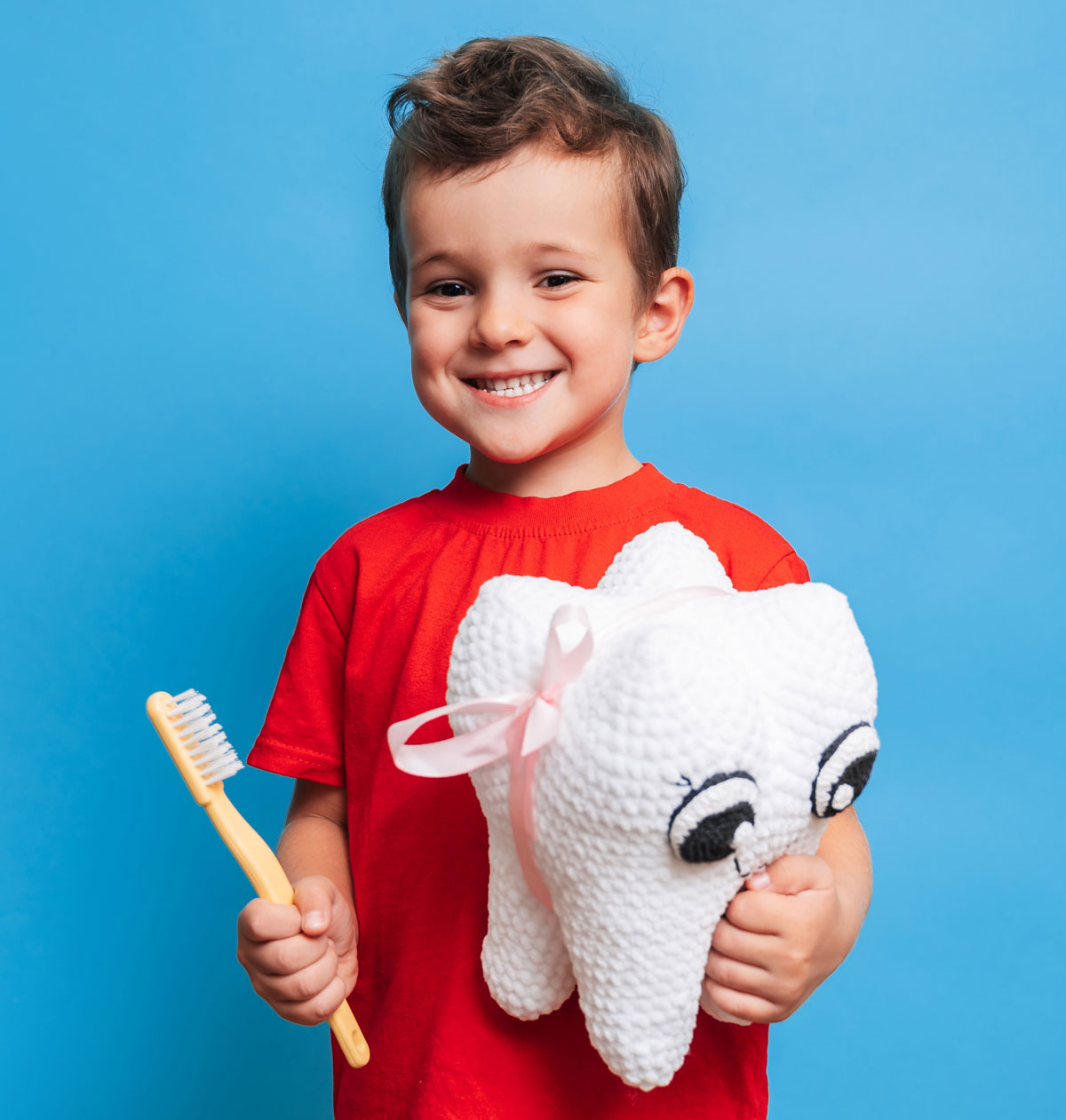
Maintaining the Health of Primary (Baby) Teeth
Maintaining healthy primary (baby) teeth is essential. Even though these teeth will eventually be replaced, they play several critical roles, including:
- Supporting clear speech and proper enunciation
- Helping a child chew food correctly
- Maintaining space for adult teeth
- Preventing the tongue from posturing abnormally
Premature loss of baby teeth can cause adjacent teeth to shift, potentially leading to impacted adult teeth, lengthy orthodontic treatment, and poor aesthetic results. Babies are at risk for tooth decay as soon as the first primary tooth emerges, typically around six months of age. The American Academy of Pediatric Dentistry (AAPD) recommends a “well-baby checkup” with a pediatric dentist at this age.
What is Baby Bottle Tooth Decay?
Baby bottle tooth decay refers to early childhood caries, or cavities, that can occur in infants and toddlers. While any tooth can be affected, the front upper teeth are most commonly involved. Severe cases may require extraction, and a space maintainer may be provided to prevent misalignment.
Regular pediatric dental visits and proper homecare can prevent baby bottle tooth decay entirely.
How Does Baby Bottle Tooth Decay Start?
Tooth decay begins with acid-producing bacteria in the mouth. Bacteria can be transmitted from parent to child via saliva (sharing spoons or cleaning pacifiers with the mouth). The most significant cause, however, is frequent exposure to sweetened liquids, including:
- Breast milk
- Formula
- Juice
- Sweetened water
When sugary liquids are given at nap or bedtime, they remain in the mouth longer. Bacteria feed on the sugar and produce acids that wear away enamel, causing cavities. Insufficient fluoride intake increases the risk, as fluoride protects enamel and promotes remineralization. Pediatric dentists can assess the need for fluoride supplements based on the child’s risk factors.
How to Prevent Baby Bottle Tooth Decay at Home
Parents play a key role in preventing tooth decay. Follow these guidelines:
- Avoid saliva transfer: rinse pacifiers and toys in clean water; use a separate spoon for each person.
- Clean the baby’s gums after every feeding with a clean washcloth.
- Begin brushing with an age-appropriate toothbrush and ADA-approved toothpaste when teeth emerge.
- For children under two, use a rice-sized amount of fluoridated toothpaste. After age two, use a pea-sized amount. Use a soft-bristled toothbrush.
- Do not place sugary drinks in bottles or sippy cups; use water, breast milk, or formula.
- Encourage regular cup use once the child can hold it independently.
- Never dip pacifiers in sweet liquids like honey.
- Encourage a healthy diet and eliminate sugar-filled snacks.
- Avoid giving a liquid-filled bottle at bedtime; if necessary, fill with water.
- Supervise brushing until the child can perform it effectively, usually around age seven.
- Ask the pediatric dentist to review your child’s fluoride intake.
If you have questions or concerns about baby bottle tooth decay, please contact our office.