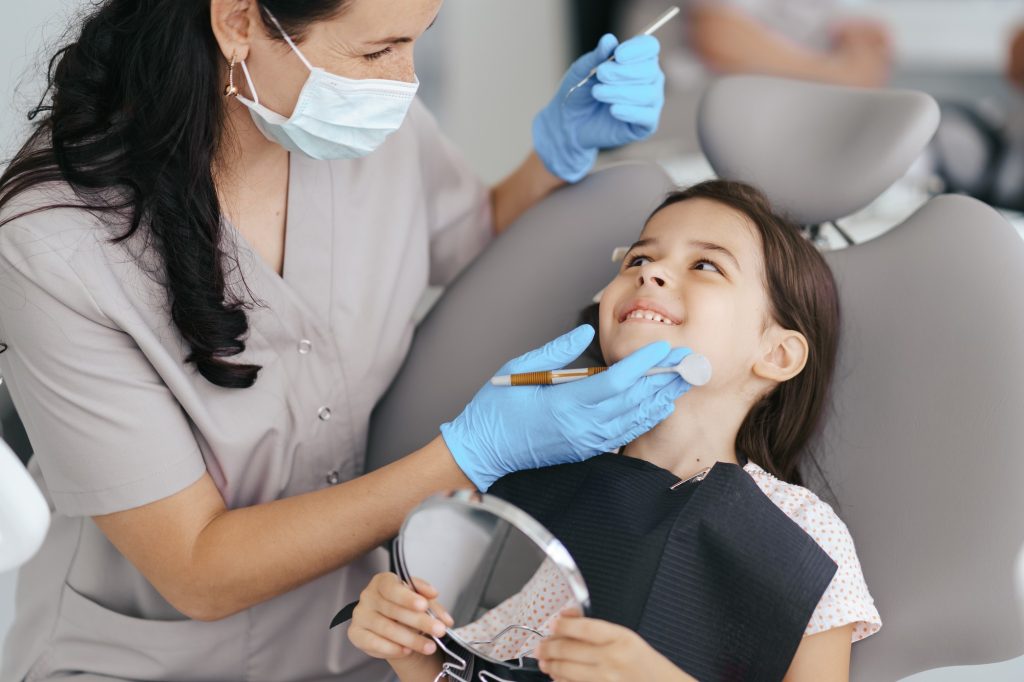
The eruption of primary teeth (also known as deciduous or baby teeth) follows a similar developmental timeline for most children. A full set of primary teeth begins to grow beneath the gums during the fourth month of pregnancy. For this reason, a nourishing prenatal diet is essential for the infant’s teeth, gums, and bones.
Typically, the first primary tooth breaks through the gums between six months and one year. By age three, most children have a complete set of 20 primary teeth. The American Dental Association (ADA) recommends scheduling a “well-baby” appointment with a pediatric dentist at six months of age. Pediatric dentists guide parents and children in prevention strategies, with an emphasis on a sound, “no tears” daily home care plan.
Request an AppointmentAlthough primary teeth are temporary, they play a vital role in speech production, jaw development, chewing, and maintaining proper spacing and alignment for adult teeth. Proper care of primary teeth helps prevent decay, premature tooth loss, malnutrition, and childhood periodontal disease.
Order of Primary Tooth Eruption
- Central incisors – Erupt at 6–12 months (upper and lower front teeth).
Lost between ages 6–7 years.
These can be gently cleaned with a soft cloth to prevent bacterial infection. - Lateral incisors – Erupt at 9–16 months (next to central incisors).
Lost between ages 7–8 years. - First molars – Erupt at 13–19 months (back teeth).
Lost between ages 9–11 years.
These may cause discomfort; cool gauze, clean fingers, or teething rings can help. - Canines (cuspids) – Erupt at 16–23 months (next to lateral incisors).
Lost between ages 10–12 years. - Second molars – Erupt at 23–33 months (very back teeth).
Lost between ages 10–12 years.
Additional Facts About Primary Teeth
- Baby girls often experience tooth eruption slightly earlier than boys.
- Lower teeth usually erupt before the matching upper teeth.
- Teeth often erupt in pairs, so some months may show no activity, while others bring multiple teeth.
- Primary teeth are smaller and whiter in appearance than permanent teeth.
- It is normal for school-aged children to have a mix of primary and permanent teeth.
If you have questions or concerns about primary teeth, please contact our office.